Staging success often comes down to speed: how quickly you can walk into an empty home and make it feel intentional.
That is why top stagers rely on a tight set of pieces that solve most listings, then refresh the look through styling. The goal is not a massive warehouse — it is a smart one. Every piece earns its footprint by working across multiple price points, square footages, and buyer profiles. When your core inventory is dialed in, you stop shopping for each job and start deploying with confidence.
These seven categories are the ones that consistently earn their keep.
1. A Neutral Sofa That Fits Most Homes
The sofa is the anchor of nearly every living room staging, which means it also carries the most risk if it is wrong. Too large and it makes the room feel cramped in listing photos. Too small and the space reads as empty and disconnected.
Having two sofas in slightly different scales — one for larger open-plan great rooms and one for tighter spaces — lets you cover a wider range of listings without compromise.
2. A Sculptural Accent Chair
The accent chair is where you can afford to have a point of view. Buyers expect the sofa to be safe; the accent chair is what makes the room feel curated rather than furnished.
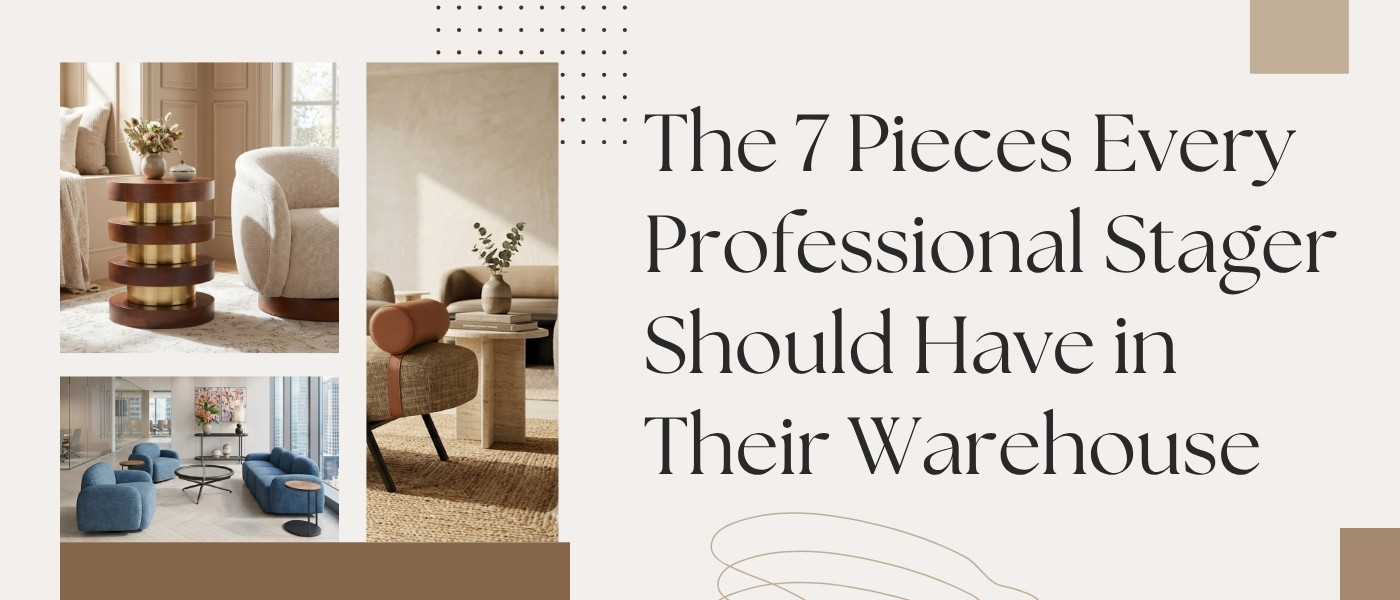
Look for a silhouette with visual interest — a curved back, an exposed wood frame, or an interesting leg detail — that still reads as broadly appealing. Bouclé, textured weaves, and warm velvets in muted tones all photograph beautifully and feel elevated without alienating buyers.
One strong accent chair, positioned at a slight angle with a simple side table and a styled tray, can transform a corner from dead space into the most compelling moment in the room.
3. Two Light Side Tables
Side tables are workhorses. They appear in living rooms, bedrooms, home offices, and reading nooks — sometimes all in the same listing. The key word is light: glass, acrylic, slim metal frames, or open-shelf designs that do not visually weigh down a space.
Having a matching pair gives you flexibility for symmetrical nightstand arrangements, but two tables of similar height and finish that are not identical can also work well for a layered, collected look that feels less staged.
Prioritize tables that stack or nest for easy transport and compact storage. The more listings a side table can serve without looking like the same piece, the better the ROI on your warehouse space.
4. A Coffee Table With a Strong Profile
The coffee table has one job in staging: make the seating area feel complete and give the lifestyle photographer something to style. A weak or generic coffee table undermines both.
Strong profile means visual presence — whether that comes from an interesting shape, a bold material like marble-look top, smoked glass, or dark metal, or a distinctive base. Round and oval tables work well in smaller living rooms where circulation matters. Rectangular tables anchor larger sectional setups.
Keep the surface clean and intentional: a tray, a stack of books, a simple object. The table should invite the eye, not compete with it.
5. A Dining Table That Scales
The dining area is often the second-most-photographed space in a listing, and buyers are almost always trying to answer the same question: will my table fit here? Your job is to answer it for them.
An extendable dining table is the stager’s best friend — compact for smaller homes, expanded for larger dining rooms. Aim for a finish that bridges styles: a light wood tone, a white or concrete-look top, or a dark walnut that reads as both modern and classic.
Proportion matters as much as size. A table that is correctly scaled to the room — not too small, not pushed awkwardly against a wall — makes the entire space feel more intentional and livable.
6. Mix-and-Match Dining Chairs
A matching set of four to six dining chairs is the obvious choice, but stagers who invest in two complementary chair styles open up a lot of creative flexibility. Pairing a upholstered host chair at the heads with a simple side chair along the bench sides, for example, instantly elevates a standard dining setup.
For maximum versatility, choose chairs with clean lines and finishes — natural wood, matte black metal, or soft upholstery in a neutral — that play well with multiple table finishes. Chairs that stack or store flat are a practical bonus when warehouse space is at a premium.
The dining chair is also one of the most noticed details in listing photography. A chair with a little visual character — an interesting back cutout, a subtle curve — often does more for the overall feel of a room than the table it surrounds.
7. A Console Table for the Entry
First impressions in a listing happen in the first eight seconds — and the entry sets the tone for everything that follows. A console table gives you the tool to make that moment land.
Slim profile is essential: the entry needs to feel open and welcoming, not blocked. A console with a lower shelf gives you a second styling surface — a basket, a pair of books, a small plant — that adds depth without clutter.
In open-plan homes where there is no true foyer, a console placed behind the sofa can define zones and create a visual sense of entry. It is one of the most versatile pieces in your entire kit.
Make the Same Kit Look New
The goal of a tight core inventory is not repetition — it is efficiency. With the right seven pieces in place, the styling layer is what changes the story: different rugs, pillows, throws, artwork, and accessories shift the palette and mood from listing to listing.
Warm textiles and terracotta tones for a cozy family home. Clean whites and minimal accessories for a modern condo. Layered neutrals and botanicals for a transitional suburban property. The furniture stays the same. The feel does not.
This is what separates stagers who run lean and profitable operations from those who are constantly buying for jobs and storing pieces that rarely leave the warehouse.
Building Your Kit
If you are starting from scratch or refreshing an inventory that has gotten unwieldy, the best place to start is with pieces that have clear multi-use potential, strong photography presence, and reliable availability for reorders when something ages out.
We work with a lot of staging and design professionals who need exactly that — pieces that ship fast, hold up through repeated installs, and look good enough to justify the square footage they occupy. If you want to talk through what a warehouse plan built around these seven categories could look like for your market, we are here for that conversation.
Email us at hello@zuomod.com with any questions.
Or give us a call at 510-877-4087 (Mon–Fri: 5:00 AM–5:00 PM PT)