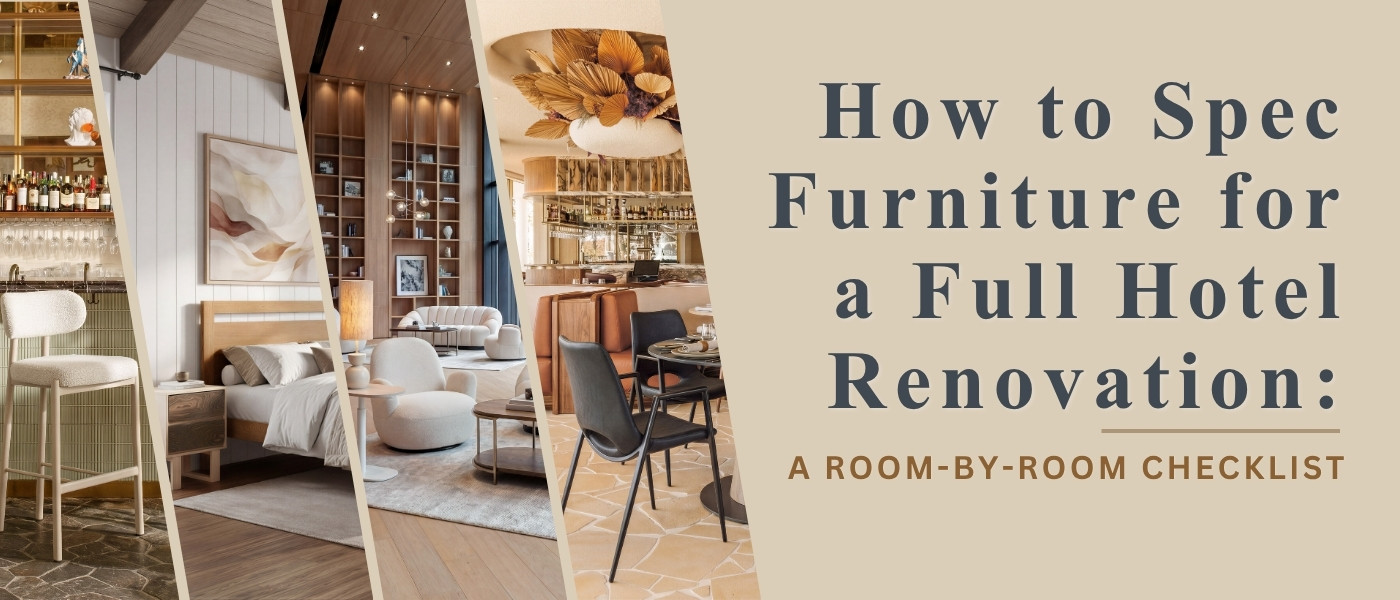
A full hotel renovation is a moving target: brand standards, owner expectations, schedule pressure, and the simple reality that ‘perfect’ is rarely deliverable at scale. A solid furniture spec is how you keep the project from turning into a thousand micro-decisions that derail the budget and the timeline.
This guide is written like a spec package you can actually follow. It is not about one trend or one look. It is about protecting the guest experience, minimizing surprises during procurement, and making sure the furniture package installs cleanly.
Before You Pick a Single Chair: Set Your Spec Standards
Start by defining the non-negotiables that apply everywhere in the property. These become your filters when the project gets noisy.
- Target durability level: what kind of wear are you designing for (airport-adjacent business hotel, resort with families, extended stay)?
- Maintenance reality: what can the hotel team actually support (on-site repair, replacement parts, limited storage)?
- Lead-time and replacement plan: will you need quick reorders to keep rooms consistent? Decide now if alternates are allowed and how they will be documented.
- Compliance and safety: confirm the brand or local requirements early so you are not redesigning later.
Guestroom: Where Comfort Meets Repeatability
Guestrooms are the volume purchase, which means tiny spec choices become big money. The goal is to create a room that feels upgraded while staying predictable to build and replace.
Key items: bed frame or headboard system, nightstands, dresser or console, desk or work surface, task chair, lounge chair (if applicable), luggage bench, mirrors, and lighting.
Practical spec moves that reduce headaches: choose a consistent finish family across casegoods so replacements can match; specify hardware that feels intentional, not generic; and make the desk chair a real chair. A flimsy chair gets complained about faster than almost anything in the room.
Lobby and Arrival: The First 90 Seconds
Your lobby has to do multiple jobs: make the brand feel real, absorb check-in waits, and accommodate different guest personalities at once.
Think in zones instead of one big scene: a quick perch zone, a social lounge, and a quieter corner for people who want to disappear with a laptop.
Spec priorities here are less about matching and more about performance under high traffic: stable bases, contract-minded frames, and upholstery choices that hold their shape. Plan at least one ‘signature’ vignette that becomes the visual memory of the property.
Restaurant and Bar: Furniture as a Revenue Tool
F&B furniture is not decoration. It is a throughput lever. The wrong seat height, the wrong back comfort, or the wrong spacing can quietly cost covers.
For dining chairs and stools, prioritize comfort over an entire meal, consistent seat heights, and durability at leg joints and foot rails.
Tables: choose sizes that flex for two-tops and four-tops without constant reconfiguration. Ensure bases do not create knee conflicts. Also plan your damage strategy: restaurants are hard on finishes; specify surfaces that can be refinished or swapped without replacing the whole table.
Meeting and Co-Working: Quietly High Expectations
These spaces succeed when they feel effortless. Guests should immediately understand where to plug in, where to sit for a call, and where to sit for a meeting.
Prioritize ergonomic seating, task lighting, and flexible tables. Consider a mix: communal tables, two-person tables, and lounge seating with occasional tables.
Operational detail that matters: power access. Even if you are not specifying electrical, the furniture layout should anticipate where power can realistically be delivered.
Outdoor and Pool: The Highest False-Economy Category
Outdoor is where cheap purchases punish you later. UV exposure, chlorine, salt air, and temperature swings are unforgiving.
Spec by conditions: is the furniture covered or fully exposed? Will it be stacked, moved daily, or left in place? Are cushions stored overnight?
Choose materials designed for outdoor use and plan cushion storage and replacement. If the operator will not store cushions, do not spec delicate light fabrics that show every mark.
Back-of-House: Do Not Ignore the Staff Experience
Back-of-house furniture is often treated as an afterthought, but staff spaces affect retention and morale.
Prioritize simple durability, easy cleaning, and correct sizing. Make sure breakroom seating is actually comfortable and not the kind of chair people dread.
How to Package the Spec So Procurement Does Not Break It
The best design fails if the documentation is vague. Create a spec package that answers questions before they are asked: a finishes schedule that is unambiguous; approved alternates with rules for when they can be used; a replacement plan; and a punch-list mindset for what you will inspect during install.
Want help building a hotel-ready furniture package that stays consistent across guest rooms and public spaces? Share your room count, concept, and timeline, and we can help you map options, alternates, and a realistic procurement path.
Email us at hello@zuomod.com with any questions.
Or give us a call at 510-877-4087 (Mon–Fri: 5:00 AM–5:00 PM PT)