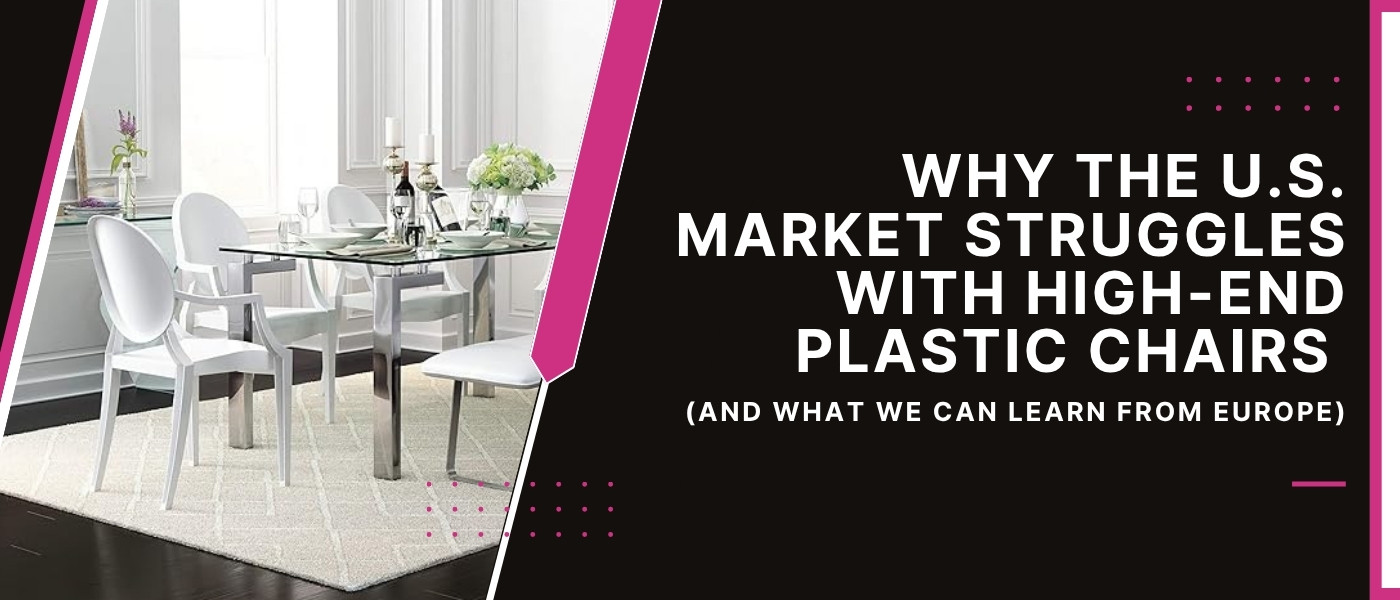
In many European design hubs—Milan, Copenhagen, Berlin—modern plastic chairs grace both cafes and living rooms with style and prestige. They’re colorful, sculptural, often stackable, and embraced by homeowners as symbols of taste and design consciousness. Yet in the United States, the same chairs are often dismissed as “cheap,”“temporary,”or simply “not worth it”for residential use. This disconnect isn’t just about aesthetics—it’s cultural, historical, and rooted in how the U.S. values furniture materials and longevity.
So, why does the American market continue to resist high-end plastic seating, especially in homes, while Europe champions it? And is that starting to change?
1. The Material Stigma: Plastic ≠ Premium (in the U.S.)
American consumers, particularly in the residential market, still associate plastic with disposability. This perception is deeply entrenched. Plastic is the material of school cafeterias, fast food chairs, patio furniture, and temporary events. It’s inexpensive, easily replaced, and usually utilitarian.
Even when plastic chairs feature refined design, engineering, and aesthetics—like molded polycarbonate or polypropylene—the perception remains: “That’s not real furniture.—
In contrast, Europe has spent decades elevating plastic as a design material, not just a cost-saving one. Iconic designers like Philippe Starck, Verner Panton, and Jasper Morrison helped normalize plastic as a valid and even luxurious material—when used with intention.
2. The European Design Culture Embraces Experimentation
In Europe, design is viewed as a cultural practice, not just a commercial product. Cities like Milan and Stockholm treat furniture exhibitions like art fairs, and plastic has always had a place at the table (sometimes literally).
This cultural reverence translates into retail. A $400 plastic chair in a French apartment is as normal as an upholstered armchair in an American living room. It’s not seen as inferior—it’s seen as design-forward.
This design literacy among European consumers contrasts sharply with the U.S., where residential buyers often equate high-end with traditional materials: wood, leather, metal. Plastic still struggles to enter that “premium”tier.
3. Modern Design Still Isn’t Fully Mainstream in U.S. Homes
Another key barrier is style.
While modern and contemporary furniture is growing in the U.S., the dominant taste in much of the country still leans transitional, farmhouse, rustic, or traditional. American homes—even newly built ones—often feature trim work, softer color palettes, and warmer materials that conflict with the aesthetic minimalism of molded plastic furniture.
High-end plastic chairs usually favor sleek lines, smooth finishes, and monochrome or bold color blocks. In a home filled with plush sectionals and wood coffee tables, they can feel out of place.
In Europe, modernism is more integrated into daily life. Mid-century lines, floating cabinetry, and modern light fixtures are part of everyday interiors—not niche aesthetics.
4. Residential vs. Commercial Perceptions
Ironically, high-end plastic chairs do have a presence in the U.S.—just not in residential spaces. They’re used in:
- Outdoor hospitality seating
- Modern office breakrooms
- Museums and event venues
- Boutique restaurants
Brands like Zuo Modern, Kartell, and Vitra do offer sculptural plastic seating in the U.S., but it tends to land in commercial applications. That reinforces the idea that plastic is for public use, not home comfort.
By contrast, in Europe, that same chair can go from a bistro terrace to a residential dining room with no shift in perceived status.
5. Price Sensitivity Undermines Design Value
When a consumer sees a $275 molded plastic chair online, the immediate reaction in the U.S. is often, “That seems expensive for plastic.”The value of design and aesthetic uniqueness isn’t yet fully appreciated by the mainstream residential buyer.
In Europe, a chair isn’t judged only by its materials but by its:
- Ergonomics
- History
- Brand reputation
- Design lineage
- Aesthetic contribution to the space
The American market often requires a justification rooted in material or scale: Is it heavy? Is it solid? Will it last 20 years? Plastic—even when long-lasting—feels counterintuitive to those criteria.
6. Aesthetics Meet Performance in European Models
European designers have consistently pushed boundaries with plastic by making it not only beautiful, but performance-driven:
- UV resistance
- Fade resistance
- Stackability
- Indoor/outdoor dual-use
- Recyclable or biodegradable compositions
In Europe, the functionality of plastic isn’t viewed as a compromise—it’s a strength. American consumers, on the other hand, often see these as commercial rather than residential virtues.
7. The Marketing Gap
Many European plastic chairs are sold with strong design stories. They’re promoted with beautiful photography, architectural staging, and narratives around sustainability, manufacturing precision, or design heritage.
In the U.S., those same chairs often appear online with generic photos or are buried among cheap alternatives on mass-market platforms. Without design storytelling, they appear expensive for no reason.
Zuo Modern, for instance, offers vibrant, playful molded plastic and polypropylene seating that’s ideal for urban dining spaces and patios. But in the residential market, those same products require context: who made them, why they matter, how to style them.
8. American Retailers Lean Toward “Safe”Inventory
Retail showrooms in the U.S. skew toward what sells consistently—gray sofas, white cabinets, safe color palettes. High-end plastic chairs don’t always move quickly, so they’re often excluded from displays or only shown in outdoor furniture zones.
Without physical exposure to these chairs in styled rooms, consumers rarely consider them part of their home equation. In Europe, where boutique retailers take more risks and support emerging design, plastic seating has more opportunities to shine.
9. Changing Tides: The Millennial and Gen Z Effect
Despite these challenges, there are signs of change.
- Younger U.S. consumers are more design-literate thanks to Instagram, Pinterest, and design blogs.
- There’s a rising appreciation for minimalist design and playful material contrast.
- Urban dwellers increasingly want lightweight, multifunctional furniture.
- Sustainability awareness is making durable recycled plastic more appealing.
Zuo Modern has started leaning into these values—offering colorful, stackable seating with commercial-grade resilience but approachable pricing. Their product lines often use polypropylene in exciting, stylish ways, appealing to both designers and younger buyers open to unconventional materials.
10. The Path Forward: What Needs to Happen
1. Storytelling Must Lead
Brands and retailers need to invest in showcasing plastic chairs the way they do leather sectionals or oak dining tables. That means:
- Better photography
- Styled interior settings
- Design history and ethos
- Testimonials from real users
2. Design Education
Mainstream audiences need to see that plastic isn’t just “cheap”or “temporary.”It’s functional, sculptural, sometimes even luxurious—when executed with intention.
3. Broader Exposure
Get plastic into model homes, influencer spaces, and well-designed Airbnbs. If homeowners see it done well, they’ll consider it for their own spaces.
4. Material Innovation
Push forward with eco-friendly compositions, antimicrobial plastics, and weather-resistant blends. These innovations help reframe plastic as smart, not cheap.
5. Leverage Outdoor Crossovers
Many buyers are more open to plastic outdoors. Brands can start there and gradually expand the idea of indoor placement with hybrid designs.
Final Thoughts
Europe has long embraced plastic as a material worthy of great design. The U.S., still culturally wedded to the idea that weight equals value and wood means quality, has been slower to evolve—especially in residential contexts. But with generational shifts, aesthetic evolution, and a renewed emphasis on multifunctional, resilient furniture, the door is open.
The key isn’t to convince buyers that plastic is better—it’s to show them that when used right, it’s beautiful, durable, and joyfully modern. Brands like Zuo Modern are already walking that line—offering color, form, and surprise in a material that deserves a seat at the (dining) table.
About Zuo Modern
Zuo Modern is a global brand offering a full range of stylish, affordable furniture for residential, office, and hospitality spaces. Known for its fast shipping, broad inventory, and design-forward collections, Zuo supports industry professionals with tools that make sourcing simple and dependable.
Email us at hello@zuomod.com with any questions.
Or give us a call at 510-877-4087 (Mon-Fri: 5:00 AM-5:00 PM PT)